
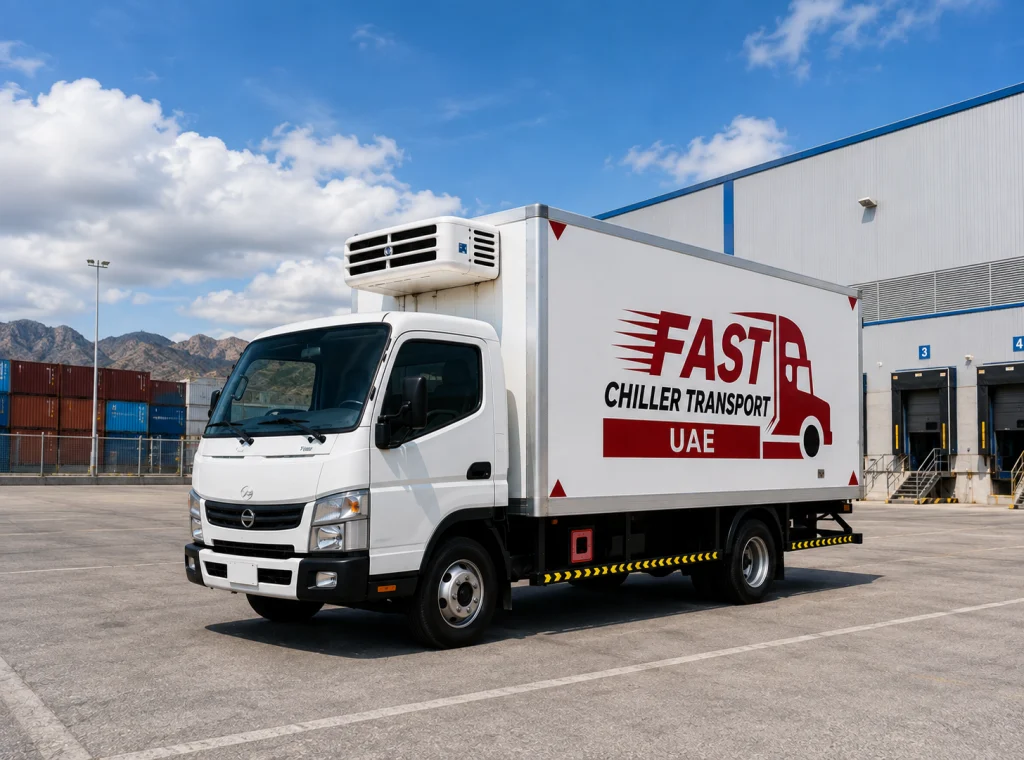
Spoilage during transport is rarely caused by a single dramatic failure — it is usually the result of small, avoidable gaps adding up across a trip. Here is where those gaps typically happen, and how to close them.
Pre-cool before you load, not after
Loading warm or room-temperature cargo into a cold vehicle forces the cooling unit to work overtime trying to bring the whole compartment back down, often before it can properly stabilise. Where possible, cargo should already be at or near its target temperature before it goes into the vehicle.
Minimise time at the loading dock
Every minute a cargo door sits open at an unrefrigerated loading dock is time your product spends outside its safe range — and in UAE heat, that clock moves fast. Having cargo staged and ready before the vehicle arrives, rather than sourced and packed after, cuts this exposure significantly.
Do not overpack the compartment
Cold air needs to circulate around cargo to maintain even temperature throughout. Overpacking a compartment can block airflow, creating warm pockets even when the unit itself is working correctly.
Plan routes to reduce stop-and-go time
Every extra stop is another door-open event. On multi-drop routes, sequencing stops efficiently — rather than backtracking — reduces total exposure time across the whole trip.
Verify, do not assume
A cooling unit running does not guarantee the cargo itself is at the correct temperature, especially near the doors or in a poorly loaded compartment. Digital temperature monitoring closes this gap by giving you an actual record, not an assumption.
The common thread
Almost every avoidable spoilage cause comes down to time spent outside the safe range — at loading, in transit, or at delivery. Reducing that exposure, more than any single piece of equipment, is what actually protects perishable cargo.