Cold Storage vs In-Transit Refrigeration: Understanding the Cold Chain
August 18, 2026 · 2 min read
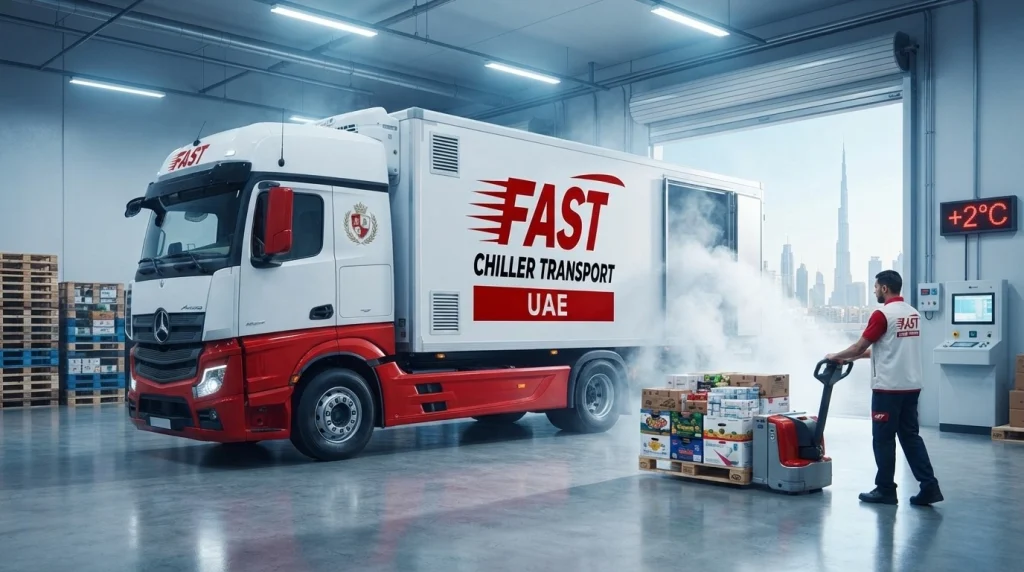
“Cold chain” describes two related but distinct systems working together: cold storage, where goods sit stationary at a controlled temperature, and in-transit refrigeration, where that same temperature has to be maintained while the goods — and the vehicle carrying them — are moving. Understanding the difference explains where most cold chain failures actually happen.
Cold storage: stable by design
Warehouses and cold rooms are built for consistency — insulated walls, backup power, and equipment sized for a fixed, known space. Once goods are inside and the door is closed, maintaining temperature is a comparatively controlled, predictable problem.
In-transit refrigeration: constantly working against variables
A moving vehicle faces conditions cold storage never has to: ambient heat fluctuating with the route, cargo doors opening repeatedly at each stop, vibration and movement, and equipment that has to run continuously off the vehicle’s own power rather than a stable grid connection. This is why in-transit refrigeration is inherently the higher-risk link in the chain.
Where the two systems hand off
The moments of highest risk in the entire cold chain are the handoffs — cargo leaving stable cold storage and entering a vehicle, and later leaving that vehicle to enter storage again at the destination. Minimising time and temperature exposure during these transitions matters more than almost any other single factor.
Why this distinction matters when choosing a transport partner
A business can have excellent cold storage and still suffer significant losses if the in-transit leg is not held to the same standard — a common and underestimated gap. Ask specifically how a transport provider maintains and verifies temperature in transit, not only what storage facilities they may also offer.
The practical takeaway
Your cold chain is only as strong as its weakest link, and that link is almost always in transit, not in storage. Real-time temperature monitoring, trained drivers, and well-maintained vehicles are what keep the in-transit leg as reliable as the stable storage on either end of it.
We specialise specifically in the in-transit leg of the cold chain — reliable, monitored refrigerated transport across all 7 Emirates.